
Protecting Health — Embracing a Healthy Lifestyle
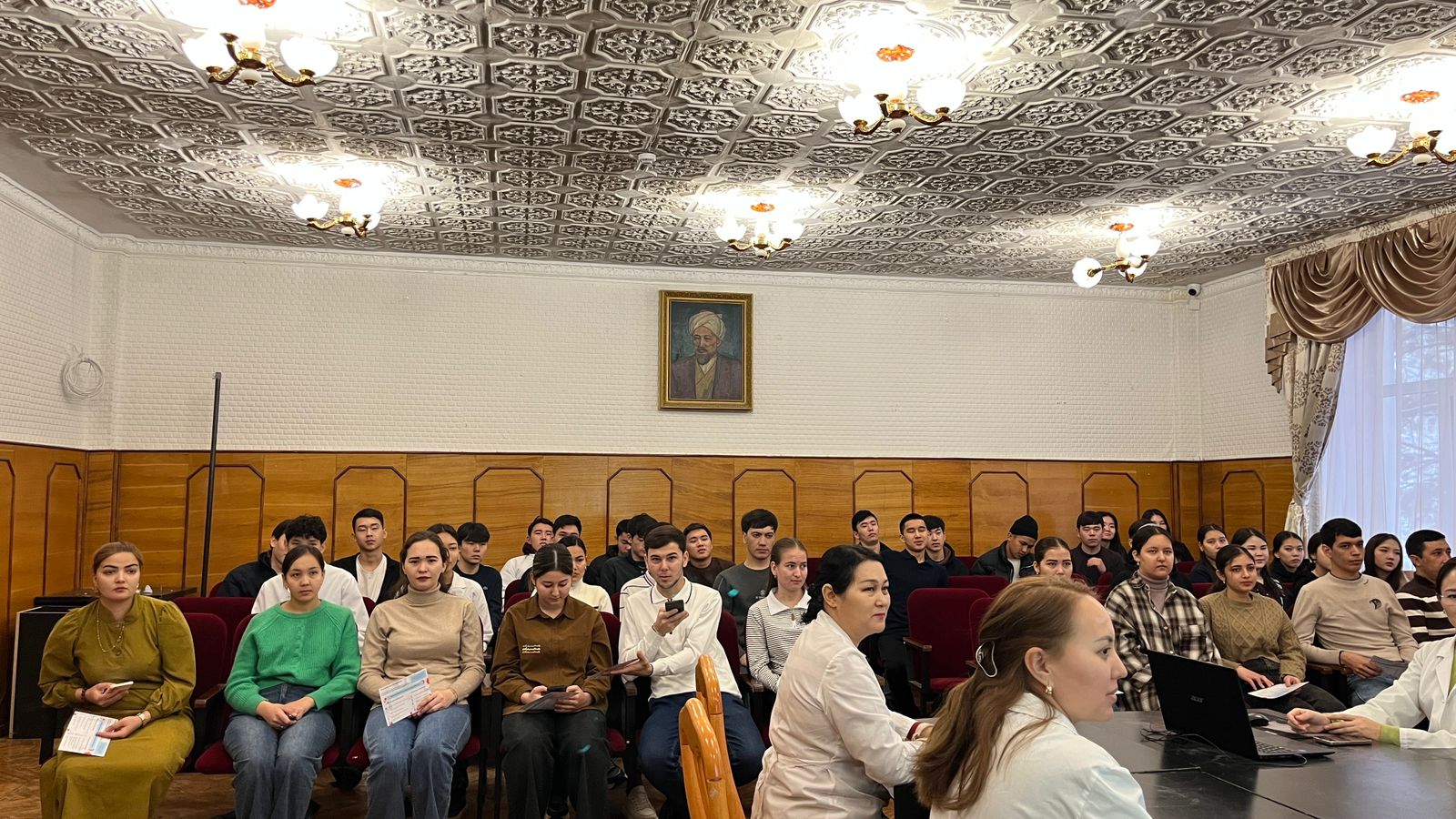
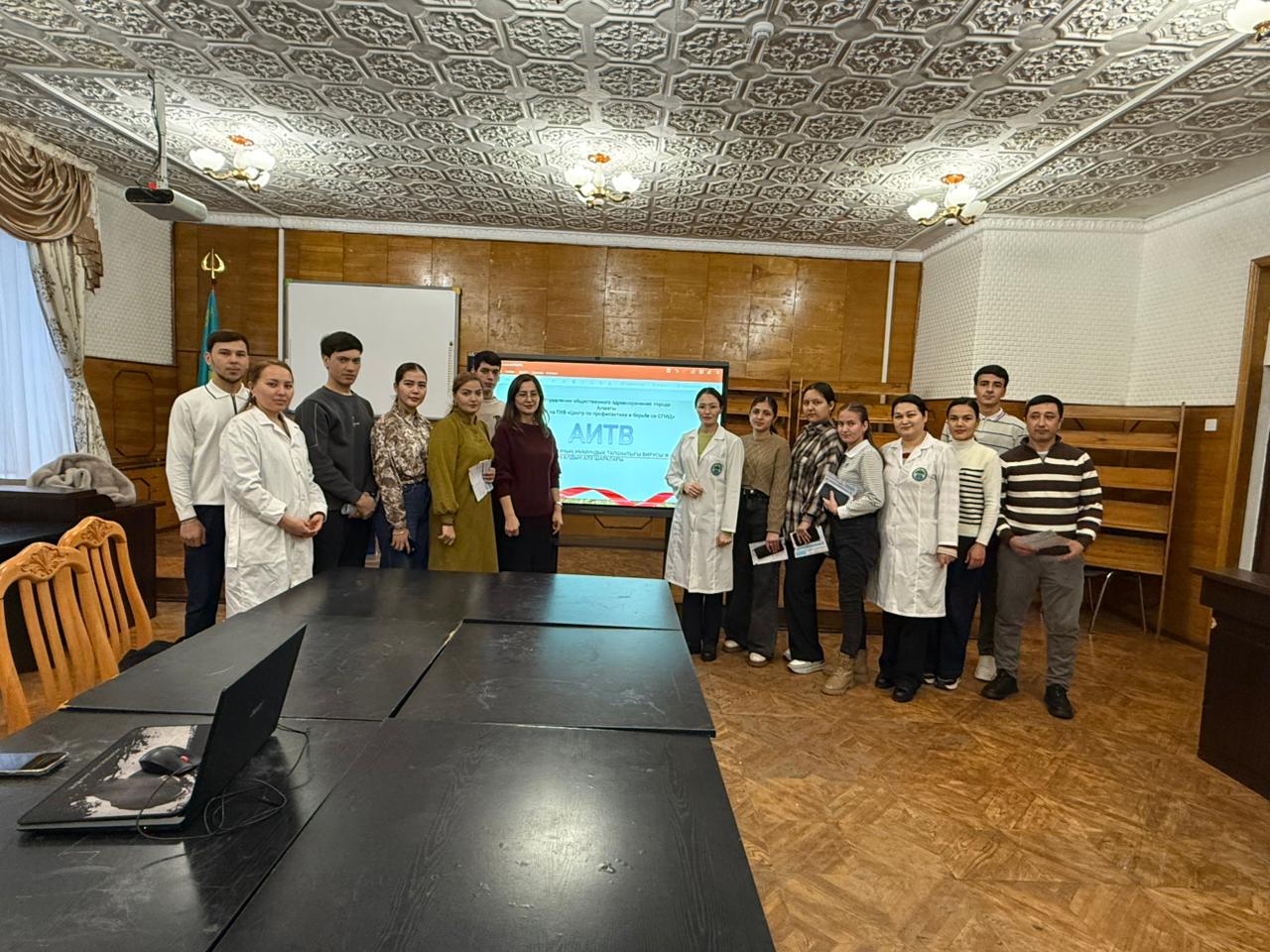
On February 12, 2026, the faculty members of the Department of Zooengineering and Biotechnology — Kulatayev B.T., Valieva G.A., Sagymbek F.G., Sanyzbayeva B.K., and Orakbayeva A.D. — together with first-year students of the Animal Husbandry and Biotechnology educational programs and specialists from the Almaty City Center for the Prevention and Control of AIDS, held an informational and educational seminar on HIV prevention.
The main goal of the seminar was to raise young people’s awareness of HIV infection, provide accurate and reliable information about routes of transmission and prevention measures, and promote the adoption of a healthy lifestyle.
During the event, the topic “Protecting Health — Embracing a Healthy Lifestyle” was discussed in depth. Within this framework, Dr. Gauhar Nagashybekkyzy, an epidemiologist from the Almaty City Center for the Prevention and Control of AIDS, delivered a presentation highlighting disease prevention, the importance of early detection, and timely access to medical care.
The seminar was conducted in an interactive format, and the specialists provided clear and comprehensive answers to participants’ questions.
Open discussions increased students’ interest in the topic and encouraged them to take greater responsibility for their own health.
Open discussions increased students’ interest in the topic and encouraged them to take greater responsibility for their own health.
Particular interest was shown in issues related to the origin of the virus, its stability in the external environment, as well as compassion and tolerance toward people living with HIV.
During the lecture, it was explained in detail that HIV is the human immunodeficiency virus that affects the immune system and reduces the body’s ability to fight infections.
The specialists emphasized that HIV is not transmitted through everyday contact such as handshakes, hugs, sharing dishes, or through airborne droplets.
The specialists emphasized that HIV is not transmitted through everyday contact such as handshakes, hugs, sharing dishes, or through airborne droplets.
Students learned about the importance of responsible behavior, the use of protective measures, and regular testing, which enables early detection of infection and timely initiation of treatment.
Such preventive activities play an important role in preventing dangerous infectious diseases among young people and in fostering a culture of health protection.
Group curator — Senior Lecturer of the Department of Zooengineering and Biotechnology
Orakbayeva A.D.
Orakbayeva A.D.
.jpeg)
.jpeg)
.jpeg)

.jpeg)