
PROFESSIONAL GROWTH.
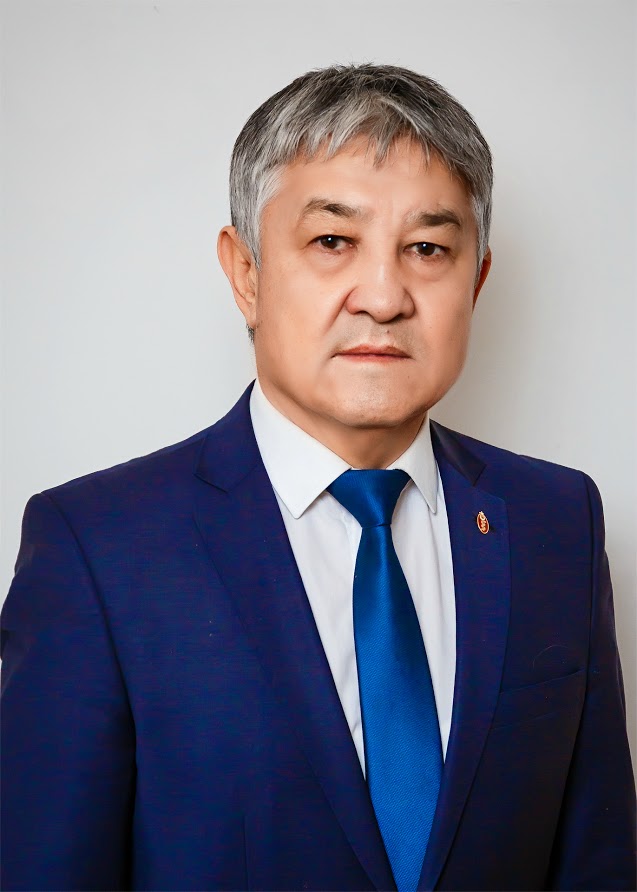
Yerken Kassymov, is a Doctor of Veterinary Sciences, Professor, Academician of the National Academy of Agrarian Sciences of the Republic of Kazakhstan. He has written textbooks on Veterinary Epidemiology and Infectious Diseases of Animals (in Kazakh), Zoonotic Infections (in English), monographs on brucellosis of animals (in Kazakh) and an English-Kazakh-Russian veterinary dictionary.
Yerken Kassymov, is a scholar with extensive experience in veterinary medicine. His multifaceted career includes clinical and laboratory practice; leadership of the Makanci District Meat, Dairy and Food Control Station and the district Veterinary Laboratory (1980-1986); targeted postgraduate and doctoral studies in Turkey; teaching and participating in projects (1987-2025).
He developed modified versions of serological tests, technologies for the industrial manufacture of new and improved biological products, and established their production at biological industry enterprises. These drugs have been successfully applied in the system "Effective prevention and accelerated elimination of the epizootic focus of bovine brucellosis" developed by him.
He actively participated in the CIDA (Canada, 2002-2005) and Twinning (WOAH, 2014-2017) educational programs. To implement the latter, a consortium of six Kazakhstani universities, led by KazNARU, was established under the auspices of WOAH, in partnership with ENVT (France). At the regional symposium of the WOAH Global Conference on "Twinning" Education for Central Asian Countries (Almaty, 2016), he delivered an expert report on strengthening regional capacity and university cooperation. Kassymov's active participation and constructive proposals at regional forums on veterinary epidemiology were marked by special certificates from the OIE and OIAE/FAO (Ankara, 1995; Beirut, 1996; Almaty, 2016).
He developed a grant project (BR 10764975, 2020-2022, continued by AP 19680565, 2023-2025) to comprehensively study Rhodococcus equi, the first in Kazakhstan and the entire post-Soviet space, in collaboration with leading scientists from Turkey and Japan. Phylogenetic analysis showed that the Kazakhstani isolate belongs to the European and East Asian clade R. equi (identity >99.5%). R. equi can be considered a model object for studying the evolution of intracellular pathogens in the context of "animal–human - environment", which corresponds to modern approaches to understanding zoonoses within the framework of the integrative concept of "Unified Health".
He is known for his scientific publications in leading journals, including the World Academy of Science, Engineering and Technology 80 and Frontiers of Veterinary Science.
His problematic articles on the development of the agro-industrial complex, the revival of ancient antelopes (saigas) in the steppe, and ensuring veterinary well-being for endemic zoonoses were published in the official media (Egemen Kazakhstan, SEMEY tany, etc.). He is also known for his active educational activities on the state TV channels of the Republic of Kazakhstan.
Educational institution: Semipalatinsk Veterinary Institute. Specialty: veterinarian. Graduation year: 1980. Qualification: veterinary medicine. Candidate of Sciences: 1990. Doctor of Veterinary Sciences: 2003. Professor (PR No. 0000402, 2008); Full Member (Academician) of the National Academy of Agrarian Sciences of the Republic of Kazakhstan (No. 0318).
He developed a grant project (BR 10764975, 2020-2022, continued by AP 19680565, 2023-2025) to comprehensively study Rhodococcus equi, the first in Kazakhstan and the entire post-Soviet space, in collaboration with leading scientists from Turkey and Japan. Phylogenetic analysis showed that the Kazakhstani isolate belongs to the European and East Asian clade R. equi (identity >99.5%). R. equi can be considered a model object for studying the evolution of intracellular pathogens in the context of "animal–human - environment", which corresponds to modern approaches to understanding zoonoses within the framework of the integrative concept of "Unified Health".
SCIENTIFIC WORKS PUBLISHED FOR 5 YEARS:SCOPUS / WEB OF SCIENCE:
1. Kassymov Y. Integrated molecular and serological survey of Rhodococcus equi in horses from three regions of Kazakhstan. Volume 12 - 2025 | https://doi.org/10.3389/fvets.2025.1650186 Scopus Q1 https://www.frontiersin.org/journals/veterinary-science/articles/10.3389/fvets.2025.1650186/full
2. Kassymov E.I. Diagnostic effectiveness of serological tests for the detection of brucellosis antibodies. E3S Web of Conferences 282, 03002 (2021) EFSC2021.https://doi.org/10.1051/e3sconf/202128203002. Scopus
ARTICLES IN SCIENTIFIC DEVELOPMENTS, RECOMMENDED BY THE COMMITTEE TO ENSURE QUALITY IN SCIENCE AND HIGHER EDUCATION OF THE REPUBLIC OF KAZAKHSTAN:
1. Yerken I. Kassymov. Biological characteristics of Rhodococcus equi Isolated in the republic of Kazakhstan. Herald of Science of S.Seifullin Kazakh Agrotechnical Research University: Veterinary Sciences. -2023. – №2(002). – P. 27-35. doi.org/10.51452/kazatuvc.2023.2.(002).1424 UDC 579.83:616.993(574)
2. Kassymov E. I., Isabaev A. zh., Oshakbaeva N. M., Aubakirov M. zh., Erenko E. N., Raketsky V. A., Sharipova A. A. monitoring the epizootic situation of brucellosis among living and living in the Kostanay region // Science and education. – 2025. – № 3-2 (80), P.29-41. DOI:10.52578/2305-9397-2025-3-2-29-41 (In Russian).
PATENT AND METHODOLOGICAL RECOMMENDATIONS:
1. Kassymov E. Patent No. 7857. (45) 03.03.2023. A method for manufacturing a vaccine against equine disease caused by Rhodococcus equi. National Institute of Intellectual Property of the Ministry of Justice of the Republic of Kazakhstan, Astana (In Kazakh).
2. Kassymov E. I. Methodological recommendations for the development of a vaccine against Equine Rhodococcosis approved by the Scientific Council of Kaznazu (Protocol No. 9 of 15.02.2023.) (In Russian)
MATERIALS OF INTERNATIONAL CONFERENCES AND ARTICLES IN JOURNALS OF THE COUNTRY:
1. Kassymov E. I. Diagnostic effectiveness of serological tests for the protection of brucellous antitel. XXIV international scientific and practical conference: Science and innovation in the XXI Century: current issues, opening and achievement. Penza, Russia 25 April 2021, P.188-1923.
2. Kassymov E. I. serological testing of cow's milk for brucellosis. Mat 2-thought interjections. scientific practice. conf. "Science and education in 21 weeks". Nur-Sultan, 2020 C-354-356.
3. Kassymov Y. Diagnostic effectiveness of serological tests for the detection of brucellosis antibodies. E3S Web Conf. Volume 282, 2021. International Conference “Ensuring Food Security in the Context of the COVID-19 Pandemic” (EFSC2021). Doushanbe, Republic of Tadjikistan, March 29-31, 2021. https://doi.org/10.1051/e3sconf/202128203002
4. Kassymov Y. I*., Ali U., Otarbayev B., Zafer S., Aslı B., Ismagulov E., Ilgekbaeva G., Ayshegul I., Osman E. Sero-epidemiology of the Rhodococcus equi in horses in Eastern Kazakhstan 2023, 39, 2, XX-XX DOI:XXX/EurasianJVetSci.2023.x /
5. Kassymov E. I. The system of images and methods of expression in Kazakh literature are the main indicators of national artistic character. Materials of the international scientific and theoretical conference "analogy in contiguous linguistics: national worldview and language", dedicated to the 90th anniversary of Professor T. K. Konurov. October 31, 2025. Ministry of education and science of the Republic of Kazakhstan, ABYLAI Khan CPC and ATU, B – 162-165.Almaty, 2025 (.
MONOGRAPH, TEXBOOK and DISTINARY:
1. Kassymov E. I. Measures to combat animal brucellosis. Almaty, publishing house" Asyl kitap", 2021 - 171B.
2. Yerken Kassymov. Zoonoses. Textbook. – Almaty, 2021.- 154p.
3. Kassymov E. I. English-Kazakh-Russian dictionary of Veterinary Medicine. Textbook, publishing house" Asyl kitap", 2021 - 252 p.
3. Kassymov E. I. With the basics of Veterinary and sanitation of epidemics and Infectious Diseases. Electronic textbook Almaty. Kaznau, 2021, - 199 P
Бакалавриат:
1.Kassymov Yerken. WEPD (Syllabus) VEID 4345 " Veterinary epidemiology and infectious diseases " В/М 4 курс 6 кредит (лекций, лабороторные и практические занятия) «Каталог элективных элективных дисциплин» 2021-2023 ҚазҰАУ.
Магистратура:
2. . Kassymov Yerken. WEPD (Syllabus) ZI 603303 «Zoonotic infections» В/М), 6 кредит (лекций и практические занятий) «Каталог Элективных дисциплин» 2021-2023 ҚазНАИУ.
Докторантура PhD:
3. Kassymov Yerken. WEPD (Syllabus) PVEPBTI 8304 «Principals of veterinary epidemiology and biostatistics in transboundary infections» (лекций и практические занятий). 8D09101 - В/М), 6 кредит. «Каталог Элективных дисциплин» 2021-2023 ҚазҰАУ.
ПРОВЕДЕННЫЕ ОТКРЫТИЕ ЛЕКЦИЙ:
1. Kassymov Yerken. OPEN LECTURE topic: “ Rabies” (2024)
2. Kassymov Yerken. . OPEN LECTURE topic: Brucellosis (Yesterday, Today, Tomorrow) Speaker - Pr. Dr. Yerken Kassymov, KazNARU, Almaty (2025)
За последние 5 лет:
1. Касымов Е.И. Dairy Production and Management // Coursera// The Pennsylvania State University //72 hours|// Cource Certificate, Jun 22.2024; https://cousera.org/verify/ C3N7K4CTQK98;
2. Kassymov Yerken has successfully completed a 72 – hour professional course on the theme: “Zoonotic Infections” during the period from 02 December to 14 December, 2024. Сертификат №240212-0012-1013. Институт повышение квалификации ӨРЛЕУ БИН 220140003022. 18/12/2024
3. Kassymov Yerken has successfully completed a 72 – hour professional course on the theme: “Principals of veterinary epidemiology and biostatistics in trans boundary infections” during the period from 10 February to 28 February, 2025. Сертификат №251-002-1306. Институт повышение квалификации ӨРЛЕУ БИН 220140003022. 28/02/2025
4. Kassymov Yerken within the framework of the international summer shool has successfully completed a 72 – hour training course “Zoonotic Infections” 02-15 june, 2025. Сертификат № 002-110. Chairman of the Board-Rector - Аkhylbek Kurishbaev
ИМИДЖЕВЫЕ ИНТЕРВЬЮ, ЭКСПЕРТНЫЕ ЗАКЛЮЧЕНИЯ И СТАТЬИ ОПУБЛИКОВАННЫЕ В РЕСПУБЛИКАНСКИХ СМИ
1. Еркін Қасымов. Абай облысының ауыл шаруашылығын дамытуға айрықша назар аудару қажет. //ҚУАТТЫ ӨҢІРЛЕР – ЕЛ ДАМУЫНЫҢ ДРАЙВЕРІ// SEMEI tany. №122 (19302) 29 қараша, 2022, 4-5 беттер.
2. Еркін Қасымов. Байырғы мамандықтың жаңа қырлары. Ақиқат* ҒАЛЫМ МІНБЕСІ. №10*Қазан*2023. Б.-28-30.
3. Еркін Қасымов. Аймақтық ерекшеліктер ескерілу қажет (Ауылдық аймақтарды дамыту тұжырымдамасы кезең кезеңмен іске асыру) Қазақстанның стратегиялық мақсаты – Еуразия құрлығындағы аграрлық орталықтың біріне айналу КӨКЕЙКЕСТІ / EGEMEN QAZAQSTAN. 16 қаңтар, 2024
4. Еркін Қасымов. Мал ауруын емдеу назардан тыс қалмасын. ҒЫЛЫМ / EGEMEN QAZAQSTAN. 20 наурыз 2024 жыл, №56 (30785)11-бет.
5. Еркін Қасымов. Агросекторды дамыту – өзекті мәселе. *ҚОҒАМ* SEMEI tany №151-152 (19619-19620) 19 желтоқсан, 2024 – 7-бет.
6. Еркін Игенбайұлы. Ауылдық аймақты жетілдіру басты талап, немесе (Сырт мемлекеттерде жүрген қазақы қой тұқымдарын еліміздің оңтүстік – шығыс аймақтарында аудандастыру) АУЫЛ ШАРУАШЫЛЫҒЫ, SEMEI tany. №115 (19742) 27 қараша, 2025, Б -5.
1. Қасымов Е.И. – ответственный исполнитель программы «Twinning» в области ветеринарного образования, реализованного консорциумом из шести вузов Казахстана под эгидой WOAH (OIE) во главе с KazNARU совместно с École Nationale Vétérinaire de Toulouse (Франция).
1. Қасымов Е.И - эксперт международного “Twinning” образовании МЭБ (OIE)
ПАРТНЕРЫ В МЕЖДУНАРОДНЫХ НАУЧНО-ОБРАЗОВАТЕЛЬНЫХ ПРОЕКТАХ (2020-2-25) :
1.Osman Erganis - PhD, профессор, руководитель департамента микробиологии университета «Selcuk” Автор ID Scopus-6603935135, Researcher ID Web of Science -C-3166-2015, Orcid-0000-0002-9340-9360, h-index-11. Фокус исследования: молекулярная микробиология, серологическая диагностика инфекционных болезней животных, разработка вакцины.
2. Zafer Sayın - PhD, профессор, департамента микробиологии университета «Selcuk”, Автор ID Scopus-8696039200, Researcher ID Web of Science -AAC-1875-2021, Orcid-0000-0001-6096-4440, h-index- 5. Фокус исследования: молекулярная микробиология, серологическая диагностика инфекционных болезней животных, разработка вакцины.
3. Peer Sans – PhD, профессор. Координатор “Twinning” проекта МЕБ ООН, «Национальная ветеринарная школа Тулузы» Франция. Vet School of Toulouse, Фокус исследования - молекулярлная микробиология, геная инженерия